
Scaling B2B Operations Through Strategic Digital Assets
The Fundamentals of B2B Digital Growth in a Modern Economy
B2B digital growth is fundamentally distinct from its B2C counterpart. While both aim to engage an audience and drive conversions, the underlying motivations, sales cycles, and decision-making processes differ significantly. In B2B, purchasing decisions are typically driven by logical appeal, a clear return on investment (ROI), and a demonstrable business value. Sales cycles are often longer, involve multiple stakeholders, and require complex evaluations. This necessitates a strategic, data-driven approach to digital marketing that caters to these unique characteristics. Our focus is on building lasting relationships and providing solutions that address complex business challenges, ensuring that every digital asset contributes to measurable outcomes. For a deeper understanding of strategic B2B digital growth frameworks, exploring resources like AScaleX B2B digital growth can provide valuable insights.
Essential B2B digital assets include:
- A user-friendly, SEO-optimized website
- Comprehensive content marketing resources (whitepapers, case studies, webinars)
- Robust email marketing and automation platforms
- Targeted paid advertising campaigns (search, social, display)
- Engaged social media profiles (especially LinkedIn)
- CRM and marketing automation systems for lead nurturing and tracking
- Analytics and reporting tools for performance measurement
Why Digital Integration is Essential for Scalability
The shift to digital is not merely about having an online presence; it’s about integrating digital channels seamlessly into every aspect of the B2B sales and marketing funnel. This integration is essential for scalability, allowing us to reach a broader market of high-intent buyers efficiently. Digital platforms offer unparalleled opportunities for measurable growth, enabling precise targeting and real-time optimization. This leads to greater cost efficiency compared to traditional methods, giving businesses a significant competitive edge. By increasing brand visibility and establishing thought leadership through digital channels, we can nurture prospects throughout their complex buying journey, ultimately accelerating growth and improving conversion rates.

Establishing a Value Proposition for the Digital Age
Establishing a compelling value proposition means clearly articulating how our solutions address specific customer pain points and deliver tangible business benefits. B2B buyers, accustomed to consumer-grade digital experiences, now expect increased self-service and web-based tools. A staggering 81% of B2B buyers indicate a need for increased self-service and web-based tools, with 69% preferring digital platforms for key moments like reordering. Furthermore, 37% of B2B buyers are willing to pay a slightly higher price to a supplier that offers ease of doing business. This highlights the critical importance of a digital-first sales approach that prioritizes convenience, responsiveness, and personalization. Our digital assets must be designed to empower buyers, offering them the flexibility and information they need at every stage of their purchasing process.
Emerging Trends: AI, ABM, and the Shift to Mobile-First B2B
The B2B digital landscape is in constant flux, driven by rapid technological advancements and evolving buyer behaviors. Key emerging trends are reshaping how we approach marketing and sales, with artificial intelligence (AI), Account-Based Marketing (ABM), and a significant shift towards mobile advertising leading the charge. These trends are not just buzzwords; they represent powerful tools and strategies that, when harnessed effectively, can unlock unprecedented growth.

Account-Based Marketing (ABM) is increasingly relevant, with a Momentum ITSMA report finding that 84% of marketers using ABM experienced pipeline growth, 77% reported revenue growth, and 72% said ABM delivered higher ROI than other marketing channels. This strategic approach, which focuses resources on a defined set of high-value target accounts, is being revolutionized by programmatic technologies, enabling personalization at scale.
An unexpected but crucial trend is the shift to mobile. 2023 marked the first year that more than 50% of digital B2B ads were placed on mobile. Traditionally, B2B marketers have focused their efforts on desktop, but buyer behavior is clearly shifting, demanding mobile-optimized experiences. This also extends to the growing importance of video content, where effective B2B video communication can significantly enhance engagement and trust.
The Role of AI in Accelerating B2B Digital Growth
AI is no longer an emerging technology in marketing—it’s mainstream. 28% of top companies already use AI in marketing, and the market is expected to reach $48.8 billion by 2030. AI is transforming B2B digital growth by enabling unprecedented levels of personalization, efficiency, and insight. Generative AI, in particular, has seen rapid adoption, with 89% of B2B buyers citing it as one of the top sources of self-guided information throughout every phase of their buying process.
This widespread adoption means that our content strategies must evolve towards “Answer Engine Optimization” (AEO). Instead of just optimizing for keywords, we need to structure content to directly answer buyer questions, catering to AI-powered search engines and conversational interfaces. Agentic AI, which can perform tasks autonomously, promises to further streamline workflows, optimize resource allocation, and deliver real-time personalization across the buyer journey. By leveraging AI for predictive analytics, we can anticipate buyer needs, optimize campaign performance, and automate repetitive tasks, freeing up human talent for more strategic initiatives.
Modernizing the B2B Buyer Experience
Modern B2B buyers expect a digitized experience that mirrors the convenience and personalization they encounter in their consumer lives. This necessitates a strong focus on omnichannel commerce to provide a unified, flexible experience across all touchpoints. 88% of B2B buyers seek more flexibility and responsiveness throughout their purchasing process.
Businesses with excellent customer experience (CX) see an average cost savings of 12% and 8% higher revenue than those with less mature CX efforts. This demonstrates that prioritizing CX is not just about satisfaction; it’s a direct driver of financial performance. Integrating front-office systems with back-office ERPs enables personalized experiences, faster order fulfillment, and holistic data insights. This seamless integration, coupled with robust self-service portals, empowers buyers and improves operational efficiency. The goal is to create an intuitive, responsive, and personalized journey that builds trust and fosters long-term relationships.
Core Strategies for Sustainable Operations
To achieve sustainable B2B digital growth, we must implement core strategies that differentiate our brand, effectively reach our target audience, and streamline the buyer’s journey. These strategies go beyond simple tactics, focusing on integrated approaches that leverage technology and data to maximize impact.
One of the foundational strategies is brand differentiation. In a crowded market, our brand needs to stand out. This isn’t just about a logo; it’s about the unique value we offer, the problems we solve, and the experience we provide. Creative, playful ads that focus on benefits rather than just features can build emotional connections and trust, which are crucial in long B2B sales cycles.
Programmatic advertising, especially when applied to Account-Based Marketing (ABM), allows for highly targeted campaigns. By using firmographic data and intent signals, we can deliver personalized messages to specific high-value accounts, ensuring our marketing efforts are focused and efficient. Retargeting then plays a critical role in nurturing these leads and re-engaging prospects who have shown interest across devices, including mobile.
Lead nurturing is another cornerstone. B2B sales cycles are rarely linear; they require consistent engagement and valuable content delivered at the right time. A multi-channel mix—combining email, social media, content, and paid ads—keeps us top-of-mind and guides prospects through their decision-making process. This strategic approach is vital for any B2B organization looking for sustainable growth, and it’s also a key factor when considering Maximizing B2B SaaS exits as a long-term goal.
High-performing Go-To-Market (GTM) motions for 2025 include:
- Inbound Marketing: Attracting customers through valuable content and experiences tailored to them.
- Outbound Sales: Proactive outreach to potential customers, often enhanced with intent data.
- Product-Led Growth (PLG): Driving customer acquisition, expansion, and retention primarily through the product itself.
- Account-Based Marketing (ABM): Concentrating marketing and sales efforts on a specific set of target accounts.
- Paid Digital Advertising: Leveraging platforms like LinkedIn and Google for targeted campaigns.
- Partner Ecosystems: Collaborating with other businesses to expand reach and generate revenue.
Leveraging Content and SEO for B2B Digital Growth
Content marketing and SEO are inseparable pillars of B2B digital growth. High-quality, valuable content establishes us as thought leaders, builds trust, and attracts organic traffic. This isn’t just about blog posts; it encompasses whitepapers, case studies, webinars, and interactive tools that address our audience’s complex needs.
In the era of AI, SEO is evolving into Generative Engine Optimization (GEO) or Answer Engine Optimization (AEO). This means optimizing content not just for keywords but also for the questions buyers ask, structuring information clearly for AI summarization, and using schema markup. Technical SEO remains crucial for ensuring our website is discoverable and crawlable by search engines. By consistently creating valuable content and optimizing it for both human and AI consumption, we can significantly increase organic traffic, build authority, and achieve goals like a 15% increase in monthly lead generation through SEO.
Building a Comprehensive Multichannel Strategy
A comprehensive multichannel strategy ensures we engage B2B buyers where they are, across various platforms and devices. Social media, particularly LinkedIn, is indispensable for B2B. LinkedIn has seen a 36% year-over-year increase in video views, and its advertising platform boasts a 113% ROAS, making it a powerful channel for targeted campaigns based on job title, industry, and company size.
Email automation plays a vital role in nurturing leads, delivering personalized content, and maintaining consistent communication. Even cold email strategies are seeing renewed effectiveness with data-driven approaches; timeline-based cold email hooks, for instance, achieve 2.3x higher reply rates (10.01%) than problem-based hooks (4.39%).
Beyond owned channels, partner ecosystems are becoming increasingly vital. Partner-sourced deals often have a 40% higher average order value (AOV) and are 53% more likely to close. By strategically integrating these diverse channels—from paid digital ads and email to social media and strategic partnerships—we create a cohesive and impactful digital presence that supports the entire buyer journey.
Measuring Performance and Optimizing for Long-Term Value
Effective measurement and continuous optimization are paramount for sustaining B2B digital growth. Without clear Key Performance Indicators (KPIs) and robust analytics, our efforts risk becoming untargeted and inefficient. Digital leaders in B2B achieve up to five times the revenue growth and up to eight times the EBIT growth of their peers, largely because they prioritize rigorous measurement and data-driven decision-making.
We must move beyond vanity metrics and focus on KPIs that directly correlate with business outcomes, such as conversion rates, pipeline velocity, customer lifetime value (CLV), and ultimately, revenue. Tools that allow us to track our Digital Quotient (DQ)—a measure of digital maturity—can provide valuable benchmarks against competitors and industry leaders.
Traditional Sales Metrics Digital Growth KPIs Sales Volume Website Traffic (Organic, Referral, Direct) Number of Meetings Lead Quantity & Quality (MQLs, SQLs) Cold Call Success Rate Conversion Rate (Website, Landing Page) Customer Satisfaction Engagement Rate (Content, Social Media) Cost Per Sale Customer Acquisition Cost (CAC) Sales Cycle Length Pipeline Velocity Repeat Business Customer Lifetime Value (CLV) Market Share Share of Voice, Brand Mentions Seven Litmus Tests for Above-Market Growth
McKinsey identifies seven critical practices that distinguish top B2B sales growth leaders. These act as a litmus test for whether our sales organizations are truly positioned for above-market growth:
- Growth performance is tracked against your market: We must benchmark our growth against specific market indices, not just internal targets. Consistently growing 200 basis points faster than the market can significantly increase enterprise value.
- There is a concrete portfolio of three to five “100 basis point” growth bets: Instead of one big bet, successful companies pursue a portfolio of smaller, high-impact initiatives (e.g., 70% from core, 20% from adjacencies, 10% from breakouts).
- Share of wallet is quantified for every customer or prospect: Using AI and analytics, we should know each account’s full revenue potential.
- More than 10 percent of annual revenue growth comes from new customers: Strong growers prioritize new customer acquisition to avoid over-reliance on existing accounts.
- Annual margin expansion is around 25 basis points: Continuous focus on pricing discipline and cost efficiency is crucial for profitability.
- High variable compensation with uncapped upside motivates top sales talent.
- Sales technology is a force multiplier, not an anchor: Our tech stack, including CRM and AI tools, should enhance seller effectiveness and provide seamless omnichannel experiences.
Data-Driven Optimization and Attribution
The complexity of the B2B buyer journey necessitates sophisticated data-driven optimization and attribution models. Multi-touch attribution helps us understand the contribution of each touchpoint across the entire sales funnel, rather than crediting only the first or last interaction. Media mix modeling (MMM) provides a holistic view of marketing effectiveness across all channels, both digital and traditional. Incrementality testing allows us to measure the true causal impact of our marketing efforts.
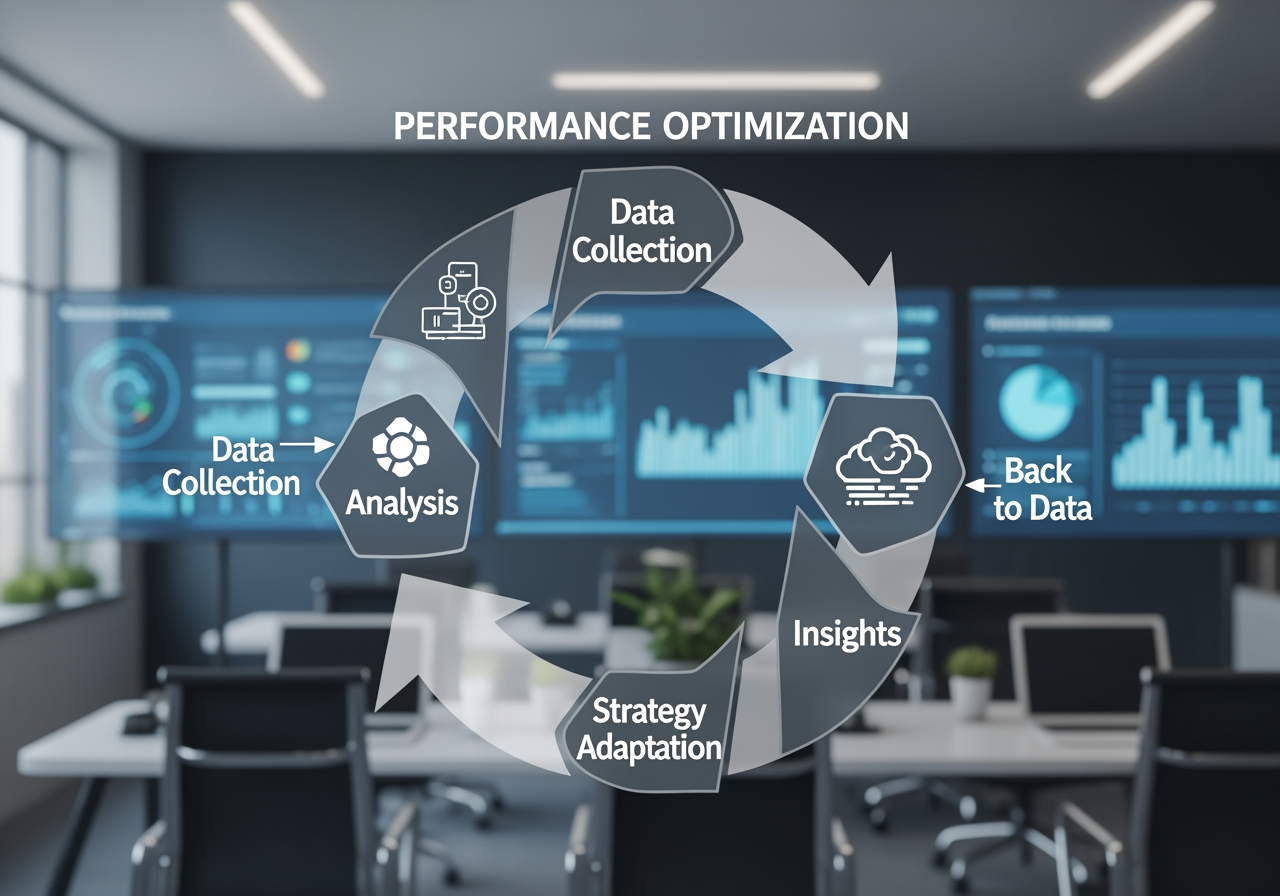
Building strong in-house capabilities in data science and marketing automation is crucial for this. Revenue-leading organizations devote 50% more budget and 80% more staff hours to digital marketing experimentation. This commitment to data and experimentation leads to significant gains, including up to 15% improvements in KPIs and an average 16% increase in customer conversion rates. By continuously collecting data, analyzing insights, and adapting our strategies in real-time, we ensure our digital marketing investments yield the highest possible ROI.
Overcoming Challenges in the Digital Transformation Journey
While the opportunities for B2B digital growth are immense, the journey is not without its challenges. Many B2B marketers grapple with issues such as data silos, misalignment between sales and marketing teams, and slow adoption of new technologies. Only 17% of manufacturers use data to personalize journeys, and just 7% deliver seamless experiences across digital channels, highlighting significant gaps. Overcoming these hurdles requires a deliberate and strategic approach.
Legacy systems often act as anchors, preventing agile digital transformation. Decoupling new digital platforms from older systems enables faster Minimum Viable Product (MVP) development and quicker adaptation to market changes. Talent gaps, particularly in specialized areas like data science and analytics, can also hinder progress. Investing in ‘analytics translators’—individuals who can bridge the gap between technical experts and business leaders—is critical. Building a unified revenue marketing team in which sales and marketing are closely aligned and incentivized toward shared revenue goals can break down silos and foster greater collaboration.
Navigating Channel Conflict and AI Readiness
As B2B companies embrace digital, channel conflict can arise, especially when moving towards direct-to-customer (DTC) models or disrupting traditional distribution networks. Strategic planning and clear communication are essential to manage these transitions effectively.
Another significant challenge is achieving true AI readiness. While 74% of B2B organizations have top-down mandates for AI adoption, only 24% report a big impact from their AI initiatives. This gap indicates that simply adopting AI tools is not enough; we need to focus on ROI-proven use cases and build the organizational agility and innovation culture necessary to integrate AI effectively. The future of B2B digital commerce will be driven by orchestrating AI, human expertise, and digital systems, rather than AI alone. This requires a willingness to experiment, learn, and adapt, ensuring that AI becomes a true force multiplier for growth.
Frequently Asked Questions about B2B Digital Growth
How does B2B digital marketing differ from B2C?
B2B digital marketing differs from B2C primarily in its audience, motivations, and sales cycle. B2B focuses on logical appeal, demonstrable ROI, and complex decision-making units (DMUs) within organizations, often involving multiple stakeholders and a longer sales cycle. B2C, conversely, often targets individual consumers, appeals to emotional triggers, and typically involves shorter, less complex purchase decisions. Our B2B strategies emphasize education, trust-building, and demonstrating long-term business value, whereas B2C often prioritizes immediate gratification and brand recognition.
What are the most effective B2B digital growth strategies today?
The most effective B2B digital growth strategies today are those that are data-driven, customer-centric, and leverage emerging technologies. These include:
- Account-Based Marketing (ABM): Highly targeted campaigns focusing on specific high-value accounts, often enhanced by programmatic advertising.
- Answer Engine Optimization (AEO): Optimizing content to directly answer buyer questions for AI-powered search and conversational platforms.
- Video Content Marketing: Utilizing video across channels to build trust, educate, and accelerate deals, especially given that 70% of B2B buyers engage with video content during their purchase journey.
- Multichannel Engagement: Providing seamless, personalized experiences across all digital touchpoints.
- AI-Powered Personalization: Using AI to deliver real-time, relevant content and interactions.
These strategies collectively aim to navigate the average 192-day B2B buyer journey effectively, building credibility and driving conversions.
How can companies measure the success of their B2B digital initiatives?
Measuring the success of B2B digital initiatives requires a comprehensive approach that focuses on business outcomes rather than superficial metrics. Key methods include:
- Digital Quotient (DQ) Scores: Benchmarking digital maturity against industry leaders.
- Pipeline Growth and Velocity: Tracking the quantity and speed of leads moving through the sales funnel.
- Share of Wallet Quantification: Measuring the percentage of a customer’s total spending in a category captured by our business.
- Revenue Growth against Market Index: Comparing our revenue growth to overall market performance.
- Customer Acquisition Cost (CAC) and Customer Lifetime Value (CLV): Assessing the efficiency and long-term profitability of customer relationships.
- Conversion Rates: Monitoring the percentage of website visitors or leads that convert into desired actions (e.g., demo requests, sales).
- ROI of Specific Campaigns: Using advanced attribution models to understand the financial return of marketing investments.
Regular analysis of these KPIs, coupled with continuous optimization, allows us to refine our strategies and ensure sustainable B2B digital growth.
Conclusion
The journey to achieving robust B2B digital growth is dynamic and demands continuous adaptation. By strategically leveraging digital assets, embracing emerging trends like AI and ABM, and committing to rigorous measurement and optimization, we can not only meet but exceed the evolving expectations of B2B buyers. The emphasis is on building a cohesive, multichannel strategy that prioritizes customer experience, fosters trust, and drives measurable business outcomes. As 75% of B2B organizations are projected to complete their highest revenue deals via digital channels by 2028, the time for a ruthless focus on digital leadership and operational excellence is now. This strategic foresight and execution are what will truly future-proof our businesses and enable sustainable scaling in an increasingly digital world.