Modern Granite Countertop Trends for 2026: A Fresh Take on Kitchen Design
Key Takeaways
- Neutral and earthy tones are replacing sterile all-white schemes.
- Textured, matte finishes are gaining preference over glossy surfaces.
- Dramatic veining and eye-catching patterns are becoming a sought-after design feature.
- Unique uses for granite, including waterfall islands and full-slab backsplashes, are on the rise.
Table of Contents
- Embracing Neutral and Earthy Tones
- The Rise of Textured Finishes
- Bold Veining and Dramatic Patterns
- Innovative Applications in Kitchen Design
- Sustainability and Eco-Friendly Choices
- Conclusion
Granite countertops have been a cornerstone of kitchen design for decades, thanks to their lasting durability and classic elegance. As home design continues to evolve into 2026, there is a clear shift in how homeowners and designers are utilizing granite to elevate the form and function of modern kitchens. Today, trends are moving toward more natural palettes, innovative finishes, and bold visual statements that reflect a desire for both beauty and practicality.
The integration of granite into kitchen spaces is being reimagined. Designers are embracing new aesthetic directions that blend traditional strength with contemporary flair. Whether undergoing a full renovation or searching for ideas to refresh a space, understanding these trends is key to creating a kitchen that feels on the pulse and timeless at once.
Alongside aesthetic shifts, advances in installation techniques and available slab options enable a new level of creativity. For homeowners who want their cooking areas to reflect both personality and functionality, choosing materials and styles that serve as the foundation for the rest of the kitchen is key. The renewed focus on making countertop spaces visually striking and practical is influencing broader considerations in layout and lighting as well.
If you are considering new kitchen countertops, exploring these emerging design ideas can help you select a look that will remain stylish and practical for years to come.
Embracing Neutral and Earthy Tones
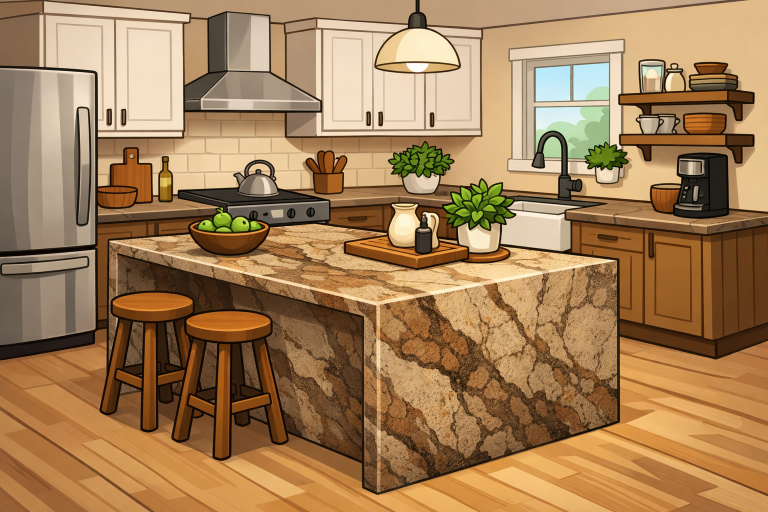
In 2026, the traditional all-white kitchen design is making space for warmer, more nurturing environments. Designers and homeowners alike are gravitating toward granite countertops in subtle, earthy shades such as beige, taupe, soft gray, and gentle brown. These hues pair well with both natural wood cabinetry and modern appliances, creating a space that feels lived-in but visually balanced. This movement is part of a larger trend embracing biophilic design principles, with interiors designed to evoke natural calm and comfort.
Subdued tones offer the additional benefit of flexibility. They serve as a harmonious backdrop for accent colors or decorative accessories, ensuring the countertop never feels overwhelming. Natural colors also highlight the organic variation in granite stone, allowing the material’s inherent beauty to shine through. These choices reflect a broader shift toward kitchen environments that are both functional gathering spaces and cozy retreats from the bustle of daily life.
The Rise of Textured Finishes
High-gloss, reflective countertops were once synonymous with luxury kitchens, but current trends favor low-sheen finishes like honed and leathered granite. These finishes provide a sophisticated matte look that is both modern and inviting. The tactile quality of a leathered finish, for example, offers an understated texture that enhances the stone’s natural character while lending a sense of depth to the room.
Practicality is also driving the adoption of these finishes. Matte surfaces do not show fingerprints, smudges, or minor scratches as easily as their glossy counterparts, making them ideal for active households or families with young children. This makes daily maintenance simpler and supports an overall lived-in aesthetic. Texture also adds visual interest, capturing and diffusing light in subtle ways that can make any kitchen feel more dynamic and dimensional.
For deeper insight into the pros and cons of various countertop finishes, homeowners can consult resources such as Houzz’s guides.
Bold Veining and Dramatic Patterns
A renewed appreciation for statement-making elements is inspiring many to choose granite slabs with prominent veining or exceptional patterns. These slabs act as functional works of art, capturing attention like a sculptural centerpiece. Instead of blending in, these countertops are intended to anchor the kitchen’s visual rhythm and serve as a conversation starter for guests.
Designers recommend incorporating bold-veined granite that complements rather than clashes with the overall kitchen palette. This could mean pairing dramatic countertops with subdued cabinetry and neutral walls so the patterns can be admired without overwhelming the space. Such design choices combine artistic sensibility with timeless durability, offering a unique approach to personalizing one of the most-used rooms in any home. For examples of how dramatic patterns can elevate kitchen spaces, check out design showcases at publications like Architectural Digest.
Innovative Applications in Kitchen Design
Granite is no longer confined to traditional countertops. In 2026, designers are using granite expansively, wrapping it over the sides of kitchen islands in a “waterfall” effect. This style creates sleek lines and highlights the stone’s natural movement, making the island a dramatic focal point. Full-slab granite backsplashes continue this look, offering visual cohesion and a sense of luxury that is difficult to replicate with tile or painted finishes.
Additionally, custom shapes and edge treatments are trending, allowing homeowners to tailor their kitchen’s look to their tastes. The versatility of granite allows design motifs to carry throughout a kitchen, from work surfaces to accent walls and even integrated sinks. These innovative uses help maximize both style and seamless integration within open-concept floor plans.
Sustainability and Eco-Friendly Choices
Sustainability is a greater concern for home renovators than ever before. Granite, as a natural material, appeals to those seeking eco-friendly solutions. Opting for locally sourced granite substantially reduces transportation-related emissions, supporting both the environment and local businesses. Furthermore, granite’s longevity means that, when well cared for, surfaces can last decades, reducing replacement frequency and associated waste.
Some manufacturers are also exploring resource-efficient quarrying and production methods, and there is growing demand for responsibly sourced stone. Integrating recycled materials or collaborating with suppliers that follow responsible extraction practices further contributes to greener home construction. For a comprehensive look at the environmental considerations of natural stone and green building, the U.S. Green Building Council’s guidelines offer helpful insights.
Conclusion
Granite countertops are experiencing a renaissance in kitchen design. By embracing a broader spectrum of colors, finishes, and design applications, homeowners can achieve a stylish kitchen that is both inviting and enduring. The evolving trends reflect not only a passion for aesthetics but also a growing commitment to sustainability and practicality. Whether you are updating existing kitchen surfaces or planning a new build, understanding these emerging styles can ensure your kitchen looks fresh and functions beautifully for years to come.