
From Local to Legendary: A Guide to Building Your Brand’s Online Presence
Why Your Online Presence is Your Most Valuable Business Asset
In today’s digital world, where do customers first look for businesses like yours? The answer is almost always online. For small businesses, having a strong digital footprint is no longer just a good idea; it’s essential for growth and staying competitive. Without it, you risk going unnoticed by potential customers actively searching for your products or services.
We understand the challenges small business owners face in navigating the digital landscape. That’s why we’ve created this comprehensive guide. It will walk you through every step of building an effective online presence. From establishing your foundational elements to mastering advanced strategies, we will show you how to connect with your local market and grow your brand.
Our goal is to help you transform your local efforts into a legendary brand. We will provide actionable insights to ensure your small business roofing SEO not only attracts new customers but also builds lasting loyalty. Let’s explore how to make your business shine online, turning local visibility into widespread recognition.
 In today’s market, homeowners vet contractors online before they even pick up the phone. A powerful online presence is no longer a “nice-to-have”; it’s the foundation of a modern contracting business, serving as your 24/7 sales rep, portfolio, and trust builder. For contractors, this means being easily found by homeowners searching for “roof repair near me” and showcasing the quality of your work to win their confidence and their business. This guide provides a blueprint for building that presence, turning your local expertise into a legendary brand.
The digital shift has fundamentally changed consumer behavior. Gone are the days when a listing in the Yellow Pages was sufficient. Today, nearly nine in ten small businesses report using at least one digital channel, recognizing the undeniable importance of being findable online. This isn’t just about having a website; it’s about creating a comprehensive digital ecosystem that reflects your brand’s professionalism, expertise, and reliability.
Consider this: Around 70% of all searches are done using Google, amounting to over 80,000 searches every second. If your business isn’t appearing on the first page of those search results, you’re losing out on 90% of your target market. This statistic alone underscores the critical need for an optimized online presence. It’s how potential customers find you, learn about your services, read reviews, and ultimately decide to contact you over a competitor.
Moreover, an online presence extends beyond mere findability. It builds credibility and trust. A well-maintained website, active social media profiles, and positive online reviews signal to potential clients that you are a legitimate, reputable business. In fact, 82% of consumers read online reviews when looking at local businesses, and 91% are more likely to use a business with positive reviews. Your online footprint serves as a digital storefront, open 24/7, providing crucial information and reassurance to customers at every stage of their decision-making process.
For small businesses, especially those in home services, an online presence also levels the playing field against larger competitors. It allows you to showcase your unique value proposition, highlight your local expertise, and connect with your community in a way that large corporations often struggle to replicate. It’s about strategic visibility, targeted communication, and building authentic relationships, all of which contribute to long-term success and growth.
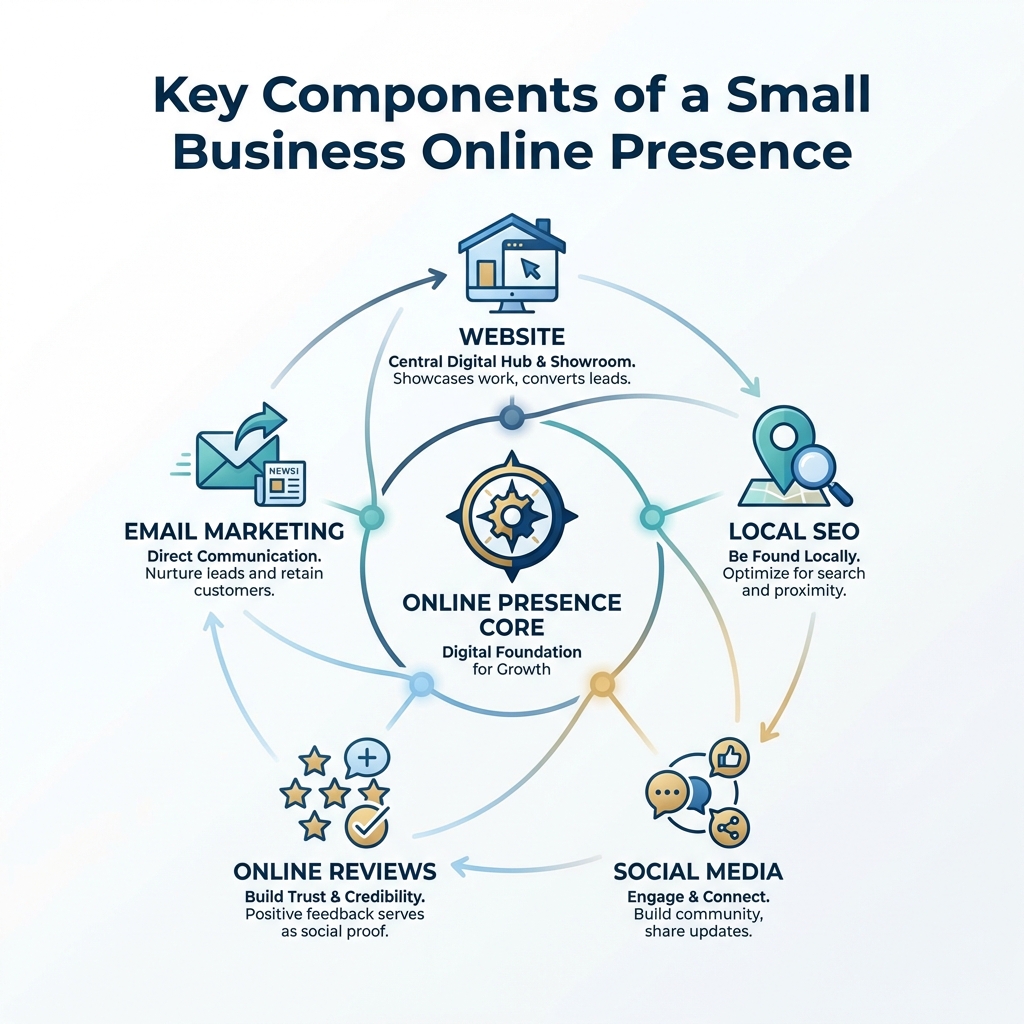
The Blueprint: Core Components of Your Digital Foundation
A strong online presence is built on several key pillars working together. Neglecting one can weaken the entire structure. It’s about creating a seamless experience for potential clients, from finding to the final handshake.
- Website: Your central hub and digital showroom. This is where you control the narrative, showcase your work, and convert visitors into leads.
- Local SEO: How customers find you in local searches. This focuses on optimizing your presence for location-specific queries, ensuring you appear when people nearby need your services.
- Reputation Management: What customers say about you online. Actively managing reviews and testimonials builds trust and social proof.
- Content & Social Media: How you demonstrate expertise and engage your community. This involves sharing valuable information and interacting with your audience on the platforms they use.
Let’s dig deeper into each of these foundational elements.
Building Your Digital Showroom: The Contractor Website
Your website is the most critical piece of your digital real estate. It’s the one platform you completely own and control. It should be more than a digital business card; it should be a lead-generation machine. Nearly half of businesses (47%) name their website as their most useful digital tool, and for good reason. It serves as your primary information source, portfolio, and direct communication channel.
A professional contractor website should immediately convey trust and competence. It needs to be visually appealing, easy to steer, and provide all the information a potential client might need. This includes clear descriptions of your services, a gallery of your past projects, customer testimonials, and prominent contact information.

Website Essentials for Contractors:
- Mobile-First Design: With the majority of local searches happening on mobile devices, your website must be fully responsive and provide an excellent user experience on smartphones and tablets. If your site isn’t mobile-friendly, you’re effectively invisible to a huge segment of your potential market.
- Clear Calls to Action (CTAs): Make it easy for visitors to take the next step, whether it’s “Request a Free Quote,” “Schedule a Consultation,” or “Call Now.”
- Lead Capture Forms: Integrate user-friendly forms for inquiries, estimates, and newsletter sign-ups.
- Project Galleries/Portfolios: High-quality images and descriptions of your completed work are essential for showcasing your craftsmanship and building confidence. Businesses with photos see 35% more website clicks.
- Customer Testimonials & Case Studies: Social proof is incredibly powerful. Feature glowing reviews and detailed success stories.
- Service Pages: Dedicated pages for each service you offer (e.g., roof repair, roof replacement, gutter installation) with relevant keywords and detailed information.
- About Us Page: Share your company’s story, values, and team members to build a personal connection.
- Contact Information: Prominently display your phone number, email, and physical address (if applicable) on every page.
- SSL Certificate: This ensures a secure connection (https://) for your visitors, which is crucial for protecting data and boosting SEO. An SSL certificate is a digital certificate that verifies your website’s identity and encrypts connections.
- Fast Loading Speed: Users expect websites to load quickly. Slow sites lead to high bounce rates and negatively impact your search rankings. Tools like Pingdom can help you test your site’s speed.
To ensure your contractor website is a robust foundation for your online presence, use this ultimate checklist to avoid missing any crucial elements.
Mastering Your Small Business Online Presence with Local SEO
Search Engine Optimization (SEO) is how you ensure your business appears when a local homeowner needs your services. For contractors, local search dominates, especially on Google Maps. When someone searches for “plumber near me” or “HVAC repair [city name],” you want to be among the first results they see.
Local SEO differs from general SEO in that it focuses on geographic relevance. It’s about optimizing your online properties to attract customers within a specific service area. Given that 46% of all Google searches are looking for local information, mastering local SEO is non-negotiable for small businesses.
Key Components of Local SEO:
- Google Business Profile (GBP): This is arguably the most critical tool for local businesses. It’s a free listing that appears in Google Search, Google Maps, and the local 3-pack. Optimizing your GBP with accurate information, photos, services, and regular posts is paramount. Businesses with photos on their GBP see 35% more website clicks and receive 42% more driving-direction requests.
- Local Keywords: Integrate location-specific keywords naturally throughout your website content, service pages, and GBP description (e.g., “roofing services Dallas,” “emergency plumber Austin”).
- Name, Address, Phone (NAP) Consistency: Ensure your business name, address, and phone number are identical across all online directories, your website, and your Google Business Profile. Inconsistencies can confuse search engines and hurt your rankings.
- Online Directories & Citations: List your business on relevant online directories like Yelp, Bing Places, Better Business Bureau, and industry-specific sites. Each listing acts as a “citation” that reinforces your business’s legitimacy and location to search engines.
- Backlinks: Quality backlinks from other reputable local websites (e.g., local chambers of commerce, community blogs, suppliers) can significantly boost your local SEO authority.
- Customer Reviews: As mentioned, reviews are vital. Encourage happy customers to leave reviews on your GBP and other platforms. Respond to all reviews, positive and negative, professionally.
- Schema Markup: This is a type of microdata that helps search engines better understand the content on your website, including your business name, address, phone number, services, and reviews.
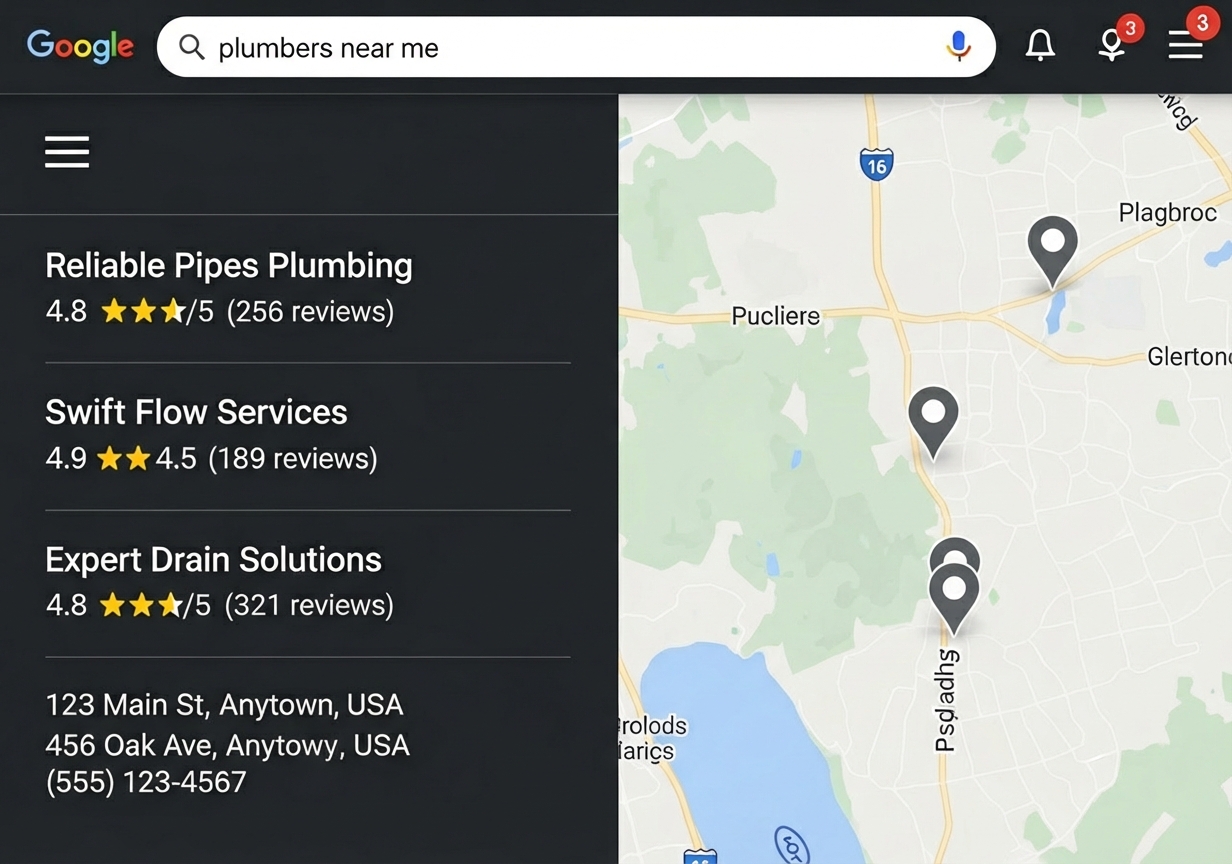
By carefully optimizing these elements and mapping your way to success with Google Local SEO, you can boost your business and get in front of motivated local customers actively seeking your services.
The Power of Proof: Reputation and Social Media
What others say about your work is more powerful than any advertisement. Managing your online reputation and engaging on the right social platforms builds the trust necessary to win high-value jobs. In an age where consumers are inundated with information, genuine testimonials and peer recommendations stand out.
Online Reviews and Testimonials:
- The Influence of Reviews: According to BrightLocal, 82% of consumers read online reviews when looking at local businesses. Furthermore, 45% of consumers said that they are more likely to visit a business that responds to their negative online reviews. This highlights not only the importance of getting reviews but also of actively managing them.
- Proactive Solicitation: Don’t wait for reviews to happen organically. Implement a system to politely ask satisfied customers for feedback, perhaps via email after a job is completed or with a small card at the end of service.
- Respond to All Reviews: Acknowledge positive reviews with gratitude. For negative reviews, respond promptly, professionally, and empathetically. Offer to take the conversation offline to resolve issues. This demonstrates excellent customer service and transparency.
- Feature Testimonials: Display positive reviews prominently on your website, social media, and marketing materials. Video testimonials can be particularly impactful.
Leveraging Social Media for Engagement and Growth: While your website is your owned property, social media platforms are where your community gathers. They offer unique opportunities for direct engagement, brand building, and showcasing your expertise. However, it’s crucial to be strategic. You don’t need to be on every platform. Focus on where your target audience spends their time. For many home service businesses, Facebook and Instagram are often key.
- Platform Selection: 59% of small businesses actively use Facebook, and 41% actively use Instagram. These platforms are excellent for visual content (before-and-after photos and project videos) and for direct customer interaction. LinkedIn can be valuable for B2B contractors or for establishing professional credibility.
- Consistent Branding: Maintain a consistent brand voice, visual identity, and messaging across all chosen platforms.
- Engaging Content: Share behind-the-scenes glimpses of your work, educational tips, community involvement, and customer spotlights. Use high-quality photos and videos.
- Active Engagement: Respond to comments, messages, and mentions promptly. Participate in relevant local groups and discussions. Social media is a two-way street; genuine interaction builds stronger relationships.
- Showcase Expertise: Use social media to share snippets of your blog posts, highlight common issues you solve, and offer seasonal advice. This positions you as an authority in your field.
From Foundation to Framework: Activating Your Online Strategy
With the core components understood, the next step is implementation. This involves a strategic approach to content, advertising, and direct communication to nurture leads and grow your brand’s authority.
Fueling Your Engine with Content and Email Marketing
Content marketing establishes you as the go-to expert in your area. Answering common customer questions through blog posts or videos builds trust and boosts your SEO. This strategy focuses on creating and distributing valuable, relevant, and consistent content to attract and retain a clearly defined audience, and ultimately drive profitable customer action.
For contractors, this means sharing your knowledge and experience in a way that helps homeowners. Think about the questions your customers frequently ask. These are perfect topics for your content.

Types of Content for Contractors:
- Blogging: Regular blog posts addressing common homeowner concerns (e.g., “Signs You Need a New Roof,” “How to Choose the Right HVAC System,” “Benefits of Gutter Guards”) can attract organic search traffic. Each post is an opportunity to rank for relevant keywords and demonstrate your expertise. Many contractors wonder, “Does blogging really help roofer SEO?” and the data shows a clear positive impact on visibility and lead generation.
- Video Content: Short videos explaining common repairs, showcasing a project from start to finish, or introducing your team can be highly engaging for platforms like YouTube, Facebook, and Instagram.
- Project Case Studies: Detailed write-ups or videos of successful projects, highlighting the problem, your solution, and the positive outcome for the client. This serves as powerful social proof.
- Infographics: Visually appealing graphics that simplify complex information (e.g., “The Lifespan of Different Roofing Materials,” “Seasonal HVAC Maintenance Checklist”).
Beyond these, you can also repurpose content to maximize your effort. For example, a single in-depth blog post can be turned into multiple short videos, a downloadable checklist, and a series of social media posts. This approach saves time while reinforcing consistent messages across your entire digital presence.
Email Marketing for Nurturing Leads: Once you’ve captured a lead through your website or social media, email marketing becomes a powerful tool for nurturing that relationship over time. It allows you to stay in touch, provide ongoing value, and be top-of-mind when the customer is ready to make a purchasing decision.
- Build Your List: Encourage website visitors and past customers to sign up for your newsletter. Offer a valuable incentive, such as a free guide or discount, in exchange for their email address.
- Segment Your Audience: Tailor your emails to distinct segments (e.g., past customers, new leads, commercial clients) for more relevant communication.
- Provide Value: Send regular newsletters with helpful tips, seasonal maintenance reminders, special offers, and updates on your services. Avoid constantly selling.
- Lead Nurturing Sequences: Set up automated email sequences for new leads that gradually introduce them to your company, showcase your expertise, and guide them towards a consultation or quote. Email marketing allows you to stay in touch with customers as a large subscriber base, and it can be a great way to establish long-term relationships. Top email marketing applications for small businesses include MailChimp, Constant Contact, and HubSpot.
To get more from your list, consider occasional customer surveys to learn what topics they care about most, and adjust your content plan accordingly. Monitoring open rates and click-through rates helps you understand which subject lines, formats, and calls to action resonate best with your audience.
Amplifying Your Reach with Paid Advertising
While SEO builds long-term organic traffic, Pay-Per-Click (PPC) advertising on platforms like Google and Facebook can deliver immediate leads for specific services or storm-response campaigns. PPC allows you to target very specific demographics and geographic areas, ensuring your ads are seen by the most relevant audience.
Google Ads:
- Search Ads: These appear at the top of Google search results for specific keywords. For example, if a homeowner searches “emergency roof repair,” your ad can appear instantly.
- Local Service Ads (LSAs): For select home service categories, LSAs appear at the very top of Google search results with a “Google Guaranteed” badge, building immediate trust. These are pay-per-lead, not pay-per-click.
- Display Ads: Visual ads that appear on websites across the Google Display Network. These are great for brand awareness and retargeting.
Social Media Advertising (e.g., Facebook Ads):
- Demographic Targeting: Facebook and Instagram allow for incredibly precise targeting based on demographics, interests, and behaviors. You can reach homeowners in specific zip codes, with certain income levels, or who have shown interest in home improvement.
- Visual Appeal: Social media ads are highly visual, making them ideal for showcasing before-and-after photos, compelling service offers, or short video testimonials.
- Retargeting: Show ads to people who have previously visited your website but didn’t convert, keeping your brand top of mind.
You can also use lookalike audiences based on your best customers to reach new people who share similar characteristics. Combining search intent (through Google) with interest-based targeting (through social platforms) gives your business multiple ways to stay visible to the right prospects.
Budgeting and Strategy: Start with a clear budget and specific goals for your paid campaigns. Monitor your results closely and be prepared to adjust your strategy based on performance. Track metrics such as cost per lead, click-through rate, and the number of booked appointments that came from ads. A well-structured campaign can achieve small business online dominance in a competitive service area by driving targeted traffic and generating high-quality leads.
Measuring Success and Overcoming Problems
You can’t improve what you don’t measure. Using analytics tools helps you understand what’s working and where to focus your efforts. The biggest hurdle for contractors is often time, but many foundational tasks can be streamlined. 66% of business owners cite lack of time as their greatest obstacle to digital engagement.
Key Metrics to Track:
- Website Traffic: How many visitors are coming to your site, where are they coming from (search, social, ads), and which pages are they viewing? Google’s own Analytics platform is a free, powerful tool for tracking website traffic and user behavior.
- Lead Conversions: How many website visitors are filling out forms, making calls, or scheduling appointments? Track your conversion rates to understand the effectiveness of your website and marketing efforts.
- Google Business Profile Insights: Monitor views, search queries, website clicks, and direction requests from your GBP dashboard.
- Social Media Engagement: Track likes, comments, shares, and reach on your social posts.
- Online Review Volume & Sentiment: Keep an eye on the number of new reviews and your average star rating.
Over time, create simple monthly or quarterly reports that summarize these metrics. Reviewing them regularly with your team helps you spot trends, such as which services are gaining interest or which neighborhoods are generating the most leads. You can then adapt your content, offers, and ad targeting accordingly.
Overcoming Common Challenges:
- Lack of Time: Automate what you can (social media scheduling, email sequences). Delegate tasks to team members or consider outsourcing to a marketing agency. Start small and consistently dedicate a set amount of time each week.
- Limited Technical Skills: Use user-friendly website builders (e.g., Wix or Squarespace) and marketing platforms with intuitive interfaces. There are many online resources and courses available to help you learn.
- Budget Constraints: Prioritize free tools like Google Business Profile and organic social media. Invest strategically in paid advertising with a clear ROI in mind. Content marketing is a long-term, cost-effective strategy.
- Keeping Up with Trends: Subscribe to industry blogs, attend webinars, and dedicate time to continuous learning. The digital landscape evolves, but core principles remain.
As you address these challenges, incremental improvement compounds over time. Even small, consistent efforts, such as publishing one new article per month or requesting reviews after every completed job, can significantly strengthen your online presence over the course of a year.
Building a Legendary Brand: Advanced Strategies
Once your foundation is solid, you can implement advanced tactics to pull away from the competition and build a truly memorable brand that homeowners trust and recommend.
Establishing Authority and a Purpose-Driven Brand
Go beyond just being a contractor. Become a trusted resource for your community. This involves creating high-value content and building a brand that stands for quality, reliability, and integrity. Modern consumers, especially younger generations, are increasingly drawn to brands with a clear purpose and values.
- Thought Leadership: Don’t just sell services; share your insights. Offer expert opinions on industry trends, new technologies, or best practices. This can be through long-form blog posts, webinars, or even local workshops.
- Community Involvement: Actively participate in local events, sponsor youth sports teams, or contribute to community projects. Showcase this involvement on your website and social media. This demonstrates your commitment to the community you serve.
- Brand Story: Articulate your company’s mission, values, and the unique story behind your business. Why did you start? What problems do you solve? What makes you different? People connect with stories, not just services.
- Consistent Messaging: Ensure your brand’s purpose and values are reflected in all your online communications, from your website copy to your social media posts and customer interactions.
Building a purpose-driven online presence resonates with modern consumers and can be a powerful differentiator in a crowded market. It moves you from being just another service provider to a respected community partner.
To deepen that connection, look for ways to align your day-to-day operations with your stated values. For instance, you can emphasize sustainability by recycling materials, recommending energy-efficient products, or reducing waste on job sites. If customer care is your core promise, share real stories of going above and beyond to solve urgent problems or support vulnerable customers.
Optimizing for a Mobile-First World
The majority of local searches happen on a smartphone, often from a driveway or in a moment of need. Your entire online presence must be optimized for a seamless mobile experience. This isn’t just about your website; it extends to your Google Business Profile, social media, and even your email marketing.
- Mobile-Responsive Design: As previously mentioned, your website must adapt flawlessly to any screen size. This is a fundamental SEO ranking factor and crucial for user experience.
- Fast Page Speed: Mobile users are often on the go and have little patience for slow-loading pages. Optimize images, minimize code, and leverage browser caching to ensure your site loads quickly on mobile devices.
- Click-to-Call Buttons: On mobile, make it incredibly easy for users to call you directly from your website or Google Business Profile with a single tap.
- Simplified Navigation: Streamline your menus and content for mobile users. Prioritize essential information and make it accessible with minimal scrolling and tapping.
- Accessible Content: Ensure all your online content, including PDFs or other downloadable resources, is easily viewable and usable on mobile devices.
You can test your site’s mobile performance with free tools from Google’s Test My Site. Regularly checking and improving your mobile experience will help you avoid losing potential customers who are searching on their phones.
The Future is Local: Leveraging Your Small Business Online Presence
The digital landscape is always evolving, but for home service businesses, the focus will always be local. The key is to consistently show up, demonstrate your expertise, and make it easy for customers to choose you. The trends point towards even more localized, personalized, and visual search experiences.
- Voice Search Optimization: As smart speakers and virtual assistants become more prevalent, optimizing for conversational, long-tail keywords (e.g., “What’s the best roofing company near me that offers free estimates?”) will become increasingly important.
- Hyperlocal Content: Go beyond city-level content. Create content specific to neighborhoods, local landmarks, or even common issues unique to certain areas within your service region. This deepens your local relevance.
- Video Testimonials & Case Studies: Video content continues to dominate. Encourage customers to provide video testimonials and create short video case studies of your projects. These are incredibly authentic and engaging.
- Augmented Reality (AR): While still emerging, AR could allow customers to visualize new roofing or siding on their homes through their phones, offering an immersive pre-purchase experience.
A commitment to Small business roofing SEO is a commitment to your company’s long-term health and growth. By staying agile, focusing on local relevance, and continuously providing value, your small business can not only survive but thrive and become a legendary brand in your community.
Your Next Steps to Online Dominance
Building a powerful online presence is a marathon, not a sprint. Start with the most critical element: your Google Business Profile. From there, focus on building a professional website that serves as your central hub. Consistent effort and a strategic approach will yield significant returns.
- This Week: Claim and fully optimize your free Google Business Profile. This is the single most impactful first step for local visibility. Ensure all information is accurate, add high-quality photos, and start posting updates.
- This Month: Outline the essential pages for your contractor website. Focus on mobile-first design, clear service descriptions, a compelling project gallery, and easy-to-use lead capture forms. A professional site is crucial for nailing your online visibility as a contractor.
- This Quarter: Develop a system for consistently requesting reviews from happy customers. Use those testimonials on your website and social media to build trust and see the results for yourself. Respond to all reviews promptly and professionally.
Your online presence is an ongoing project. It requires consistent attention, adaptation to new technologies, and a genuine commitment to serving your customers. By following this guide, you’re not just building an online presence; you’re crafting a legacy for your brand.